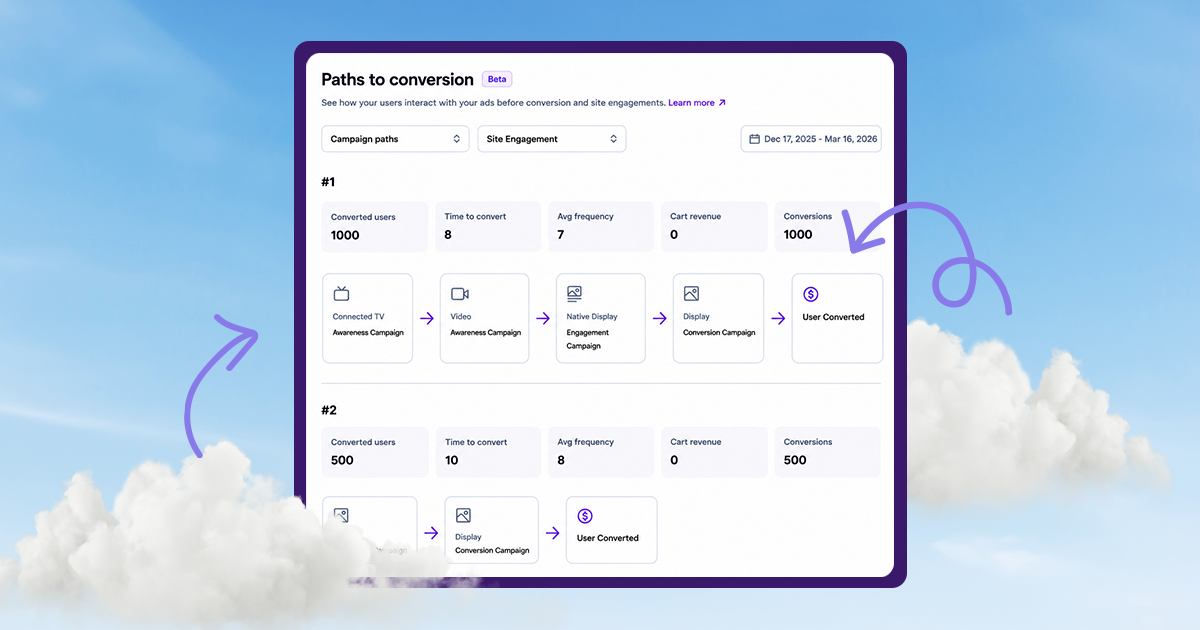

Most social media strategies are built around single moments. One ad is expected to do everything, introduce the brand, explain the product, and drive action. However, real decisions don’t happen in one step. They happen over time, as people see, learn, and build confidence. That’s where a sequential messaging strategy comes in, instead of repeating the same message, it allows brands to guide users through a series of connected interactions that move them closer to a decision.
A strong sequential messaging strategy recognizes that customers move through stages. Awareness builds over time. Confidence develops through repeated, relevant interactions. Conversion happens when messaging aligns with where the user is in that journey.
Research from the Interactive Advertising Bureau shows that sequential messaging strategies can significantly improve brand recall and conversion performance by reinforcing context over time. Each interaction builds familiarity, reduces friction, and increases confidence in the purchase decision.
Programmatic advertising has long enabled this type of sequencing across formats such as CTV, video, and display. The challenge has historically been maintaining that continuity when transitioning into social media environments. Without a shared audience strategy, messaging often resets when users move between channels.
This is where most sequential messaging strategies break down
A user exposed to a CTV ad introducing a new financial product may later encounter a generic prospecting ad on social media that ignores the prior exposure entirely. The brand loses momentum, and the customer experience feels disjointed. Instead of building on context, the message starts over.
A true cross-channel sequential messaging strategy ensures that each touchpoint builds on the last.
Sequential messaging through illumin’s platform solves this by allowing marketers to adapt creative based on prior engagement. Exposure-based audience signals allow marketers to segment users based on how they interact with advertising across the open web. Advertisers can then reinforce messaging on social media platforms with creative tailored to the user’s stage in the journey.
For example: A prospect first exposed to a brand story through CTV can later receive a product-specific message on social media. A user who completes a video can receive messaging focused on differentiation. A high-frequency exposed audience can receive conversion-oriented creative designed to drive action.
This is where a well-executed sequential messaging strategy becomes powerful, not just in theory, but in execution.
It allows marketers to move from one-size-fits-all creative to messaging that evolves with the user. Instead of repeating the same message, brands can guide users through a narrative that builds understanding and intent over time.
Sequential messaging is particularly effective in longer consideration cycles such as financial services, travel, healthcare, and B2B, where trust and familiarity play a significant role in decision-making. In these categories, a single exposure is rarely enough. What matters is consistency, relevance, and progression.
Importantly, this approach does not require changing how social media teams operate. Audiences built from programmatic exposure can be delivered directly into Meta’s Ads Manager, allowing social teams to activate and optimize campaigns using their existing setup. A sequential messaging strategy becomes something teams can execute within their current workflows, rather than a complete overhaul of how campaigns are run.
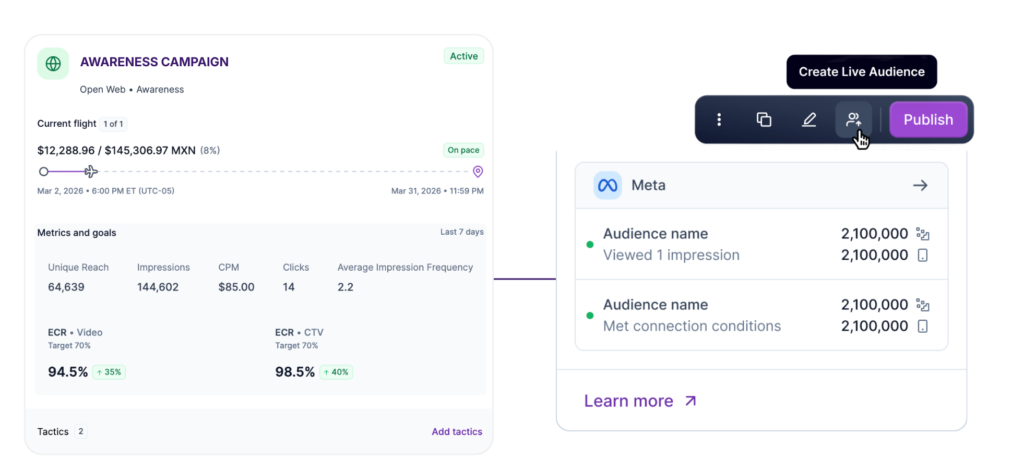
The strategy becomes collaborative rather than siloed with sequential messaging
Programmatic teams generate high-quality audience intelligence. Social teams activate those audiences within familiar platforms. Messaging evolves based on real engagement signals rather than assumptions.
This shift, from isolated campaigns to connected messaging is what defines modern cross-channel marketing.
Sequential messaging does not just improve performance metrics. It creates more relevant, more coherent advertising experiences. It reduces friction, strengthens brand recall, and drives more meaningful engagement.
In a landscape where attention is fragmented and decisions take time, a strong sequential messaging strategy is no longer optional; it is foundational.
illumin helps make that level of relevance and coordination possible.
About illumin
illumin is a strategic advertising platform focused on improving how programmatic campaigns are planned, executed, and managed. By reducing fragmentation across workflows, illumin supports in-market decision-making across the open web. Headquartered in Toronto, Canada, illumin serves brands and agencies across North America, Latin America, and Europe. For more information, visit www.illumin.com.
See More. Achieve More.