
Black Friday and Cyber Monday are still two of the biggest moments on the retail calendar, but in 2026, the bigger opportunity for marketers may be everything happening before, during and after them.
Holiday shopping is starting earlier. Consumers are researching across more channels, comparing prices and reviews, moving between digital and physical stores, and looking for value throughout the season. Especially with AI changing how people discover products, the path from “just browsing” to “buying” is becoming less predictable.
For marketers, that means one thing: Black Friday and Cyber Monday shouldn’t be treated as single moments. They should be treated as a shopping journey.
Here are the key Black Friday and Cyber Monday trends shaping that journey in 2026.
1. Black Friday and Cyber Monday starts before November
The holiday shopping season is already underway by the time Black Friday and Cyber Monday arrive.
Shoppers are planning earlier, setting budgets, exploring gift ideas and watching for deals well ahead of the traditional peak. By October, intent starts to build as consumers research, compare products and begin making purchases. November brings the biggest promotional moments, while December shifts toward last-minute gifting, delivery deadlines and inventory availability.
That gives marketers three distinct opportunities:
Inspire discovery. Reach shoppers before they know exactly what they want through CTV, online video, display, native and audio. Contextual targeting, retail and lifestyle audiences, and seasonal content can help introduce products and brands early, with messaging focused on gift inspiration, product discovery and seasonal storytelling.
Capture intent. As shoppers start comparing products, prices, reviews and offers, stay visible with high-intent audiences, contextual and geographic targeting, and sequential messaging. This is the moment to highlight product benefits, promotions, price and value, and shipping perks on Display, Online Video, Native, CTV, and DOOH channels.
Drive action. When shoppers are ready to buy, retargeting, location-based tactics, Live Audiences and cross-screen activation can help turn consideration into conversion. Messaging can shift toward shop-now offers, last-minute gifting, inventory availability and promotions through Display, Online Video, CTV, DOOH and Social.
The takeaway? The shopping season starts earlier. Your strategy should too.
2. Value matters beyond the discount
Consumers are still looking for deals, but “value” is becoming about more than the biggest percentage-off badge.
According to Deloitte’s 2026 Global Retail Industry Outlook, four in ten Americans are increasingly deal-driven or cost-conscious. At the same time, Deloitte found that up to 40% of brand value perception can come from factors beyond price, including quality, customer service, checkout ease and loyalty.
This creates an opportunity for marketers to build messaging around the full value proposition, not just price. Think product benefits, shipping perks, convenience, availability and the reasons a shopper should choose one brand over another.
It also makes audience strategy more important. Retail and lifestyle audiences, frequent retail shoppers, holiday gift buyers, deal seekers and category-specific audiences can help marketers tailor messages based on where consumers are in the shopping journey.
3. AI is becoming part of product discovery
Search isn’t the only way consumers are finding products anymore. According to Adobe’s 2025 Holiday Shopping Report, traffic to U.S. retail websites from generative AI sources increased 693.4% during the 2025 holiday season compared with the previous year.
Deloitte is seeing a similar shift from the retail side, reporting that chat-based AI tools are already driving 15% to 20% of referrals for some retailers. This points to a broader change: consumers are increasingly using AI to research products, compare options and decide what is worth buying.
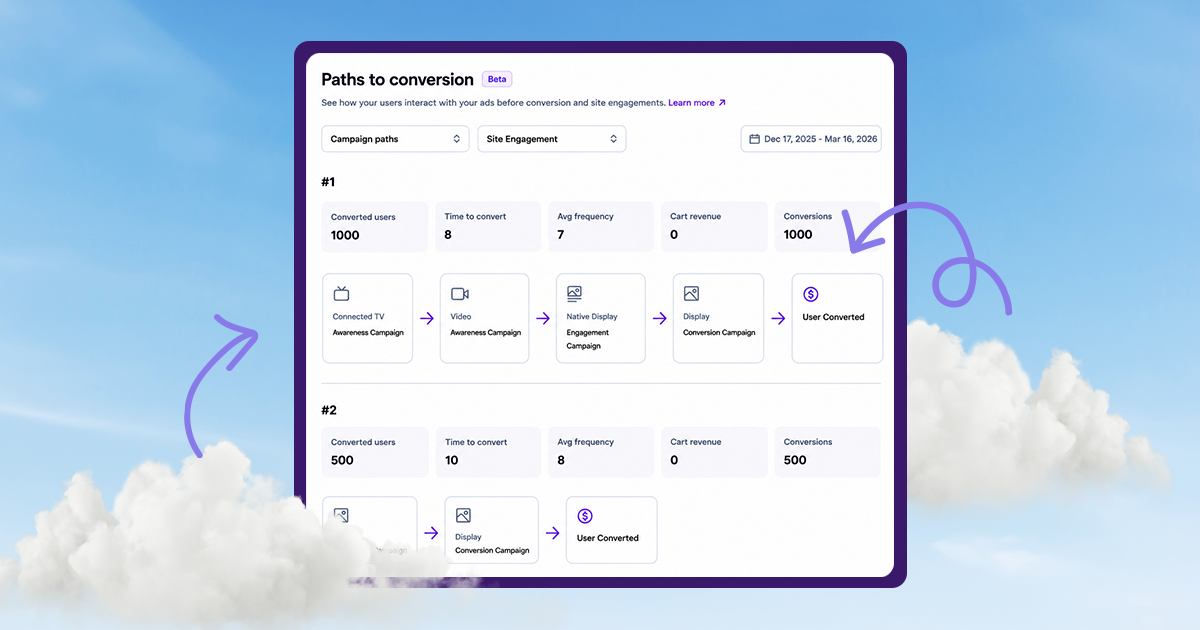
For marketers, this makes discovery even more important. A consumer may encounter a product through an AI recommendation, research it through search, see it in a video, compare it on a retailer site and eventually purchase it in-store.
The path isn’t linear and marketers need to be prepared to stay connected across it.
4. Mobile, CTV, social and physical spaces are all part of the journey
The line between online and offline shopping continues to blur.
Adobe found that mobile accounted for 56.4% of U.S. online holiday spending in 2025, making mobile the majority channel for the first time during a full holiday season. However, mobile phones aren’t operating in isolation. Consumers are moving between screens and physical environments as they shop.
This means a holiday strategy can extend from CTV and online video to display, social, DOOH and in-store environments. Location signals can add another layer, helping marketers reach people around malls, retail locations and shopping districts.
For example, POI targeting can help engage shoppers around high-value retail environments, while Live Audiences can help brands re-engage eligible exposed audiences with relevant messaging.
The goal isn’t simply to be everywhere. It’s to stay connected wherever shopping happens.
5. Measurement needs to go beyond the purchase
A Black Friday or Cyber Monday campaign can generate plenty of clicks, impressions and conversions. Yet those numbers don’t necessarily tell marketers what actually drove the outcome. As the shopping journey becomes more fragmented, measurement needs to connect media exposure with meaningful business results.
This can include Brand Lift to understand changes in awareness or consideration, Store Visit Lift or Footfall Attribution to connect campaigns with physical visits, and Incrementality to understand whether advertising actually caused an additional outcome. Attention Measurement can add another layer by helping marketers understand whether ads were actually seen and engaged with.
The question is no longer just, “Did someone click?” It’s “What did our advertising actually change?”
Black Friday and Cyber Monday 2026: Think journey, not moment
Black Friday and Cyber Monday will remain critical retail moments, but they sit within a much larger season.
In September, shoppers are discovering ideas and setting budgets. In October, they’re researching and comparing. November brings peak promotions and high purchase intent. December brings last-minute gifting, and after the holidays, returns, exchanges and post-holiday sales create another opportunity to stay connected.
For marketers, that means the strongest holiday strategies won’t wait for Black Friday or Cyber Monday.They’ll inspire discovery, capture intent and drive action across the entire shopping journey, using the right audiences, channels, messages and measurement at each stage.
Black Friday trends 2026 FAQs
When is Black Friday and Cyber Monday in 2026?
Black Friday 2026 falls on Friday, November 27, 2026, the day after U.S. Thanksgiving. Cyber Monday takes place on Monday, November 30, 2026.
When should Black Friday and Cyber Monday advertising start?
Marketers should consider starting well before November. Holiday shoppers are planning, researching and setting budgets earlier, making September and October important opportunities for discovery and consideration.
What are the biggest Black Friday and Cyber Monday trends for 2026?
Key trends include earlier holiday shopping, greater emphasis on value, AI-driven product discovery, cross-channel and omnichannel shopping, and a greater focus on measuring business outcomes beyond clicks and conversions.
How can marketers reach Black Friday and Cyber Monday shoppers?
A strong strategy should reach consumers throughout the shopping journey. That can include contextual, retail, lifestyle and high-intent audiences across CTV, online video, display, native, audio, DOOH and social, supported by retargeting and location-based tactics.
Why is incrementality important for Black Friday and Cyber Monday campaigns?
Black Friday and Cyber Monday are highly competitive periods, so marketers need to understand whether advertising actually drove additional outcomes rather than simply capturing demand that would have existed anyway. Incrementality can help separate advertising impact from existing consumer intent.
About illumin
illumin is redefining how marketers plan, execute and measure digital advertising, bringing every stage of the campaign lifecycle into one strategic platform. Through an intuitive drag-and-drop Canvas, marketers can visually connect strategy, activation and outcomes, and extend live audiences from programmatic advertising into social channels. Combining AI-powered intelligence with transparent insights, illumin gives brands and agencies the clarity to make better decisions, optimize with confidence and prove business impact. With offices in North America, Europe and South America, illumin supports brands and agencies across global markets. For more information, visit illumin.com.
See More. Achieve More.