
Hockey season is back, and this year there are more opportunities for advertisers to get in the game.
The 2026–27 NHL regular season begins September 29, 2026, with each team playing an expanded 84-game schedule and a record 1,344 regular-season games across the league. For advertisers exploring NHL CTV advertising, opening night alone gives a glimpse of hockey’s reach, with an ESPN tripleheader in the U.S. and a Sportsnet doubleheader in Canada.
Across North America, CTV NHL advertising viewing now stretches across national broadcasters, regional sports networks and streaming environments. The league is also taking the game beyond North America, with regular-season games returning to Finland and Germany in 2026. For advertisers, that means more games, more screens, more markets and more opportunities to reach hockey fans.
CTV in NHL advertising is the use of connected TV and streaming inventory to reach hockey audiences around NHL games, related programming and fan moments. However, reaching those audiences isn’t as simple as picking a game and buying an ad.
The good news? You don’t always need to buy the game to reach the fans.
Here’s your playbook on CTV for NHL advertising for the 2026–27 season.
What can advertisers actually buy around NHL games?
NHL media rights and advertising inventory vary by market, platform and deal structure. That means a game being available on CTV does not automatically mean its advertising inventory can be purchased programmatically.
In the U.S., ESPN’s 2026–27 schedule includes 100 exclusive national games across ESPN, ABC, ESPN+, Disney+ and Hulu. NHL Power Play provides access to more than 1,050 additional out-of-market games through the ESPN App.
Canada enters a particularly important new chapter this season. Rogers’ new 12-year national NHL media rights agreement runs through 2037–38. Sportsnet holds English-language rights to more than 500 national games per season, while Prime Video becomes the exclusive Canadian home of Wednesday Night Hockey.
For the 2026–27 season specifically, Prime Video’s Wednesday Night Hockey schedule includes 27 regular-season games, available exclusively in Canada in English and French.
All of that creates more places for fans to watch hockey, but streaming availability and programmatic advertising availability aren’t the same thing. Media rights, publisher agreements, geography and deal structures all influence what advertisers can actually access.
Through illumin, eligible live sports inventory can be activated through Programmatic Guaranteed (PG), Private Marketplace (PMP) and Open Auction buying. If appearing within a specific game or marquee matchup is important, planning early matters. Premium inventory can become more limited as puck drop approaches.
Here’s the bigger play: you don’t always need to buy the game to reach NHL fans. If reaching hockey audiences is the objective, advertisers have a much bigger rink to play with.
How many NHL games are available to advertisers in 2026–27?
The 2026–27 NHL season includes 1,344 regular-season games, with each of the league’s 32 teams playing 84 games. That gives advertisers months of opportunities to reach hockey audiences rather than building a campaign around one or two marquee matchups.
The actual inventory available to advertisers will vary by market, broadcaster, streaming platform, publisher agreement and buying method. The opportunity is less about accessing every game and more about identifying the games, audiences and markets that matter most to your brand.
How can advertisers build an NHL CTV advertising strategy around hockey fans?
Advertisers can build an NHL CTV advertising strategy by combining CTV, audience targeting, geographic targeting and location intelligence across the full hockey season.
Hockey fandom doesn’t start when the puck drops and disappears at the final horn. Fans watch pregame coverage. They follow teams and players throughout the season. They stream highlights and analysis. They visit arenas, sports bars and fan events, while consuming hockey content across CTV and other digital channels between games.
So instead of asking, “How do I advertise during this game?” consider a broader question: “How can I reach the fans who care about this game?”
That’s where CTV, audience targeting, geographic targeting and location intelligence can work together to create a more complete NHL advertising strategy.
What is the recommended NHL CTV advertising approach?
Think about NHL advertising as a full-season conversation with hockey fans, not a single 60-minute media buy.
Pre-game: Build awareness before puck drop
Show up before the action begins. Build familiarity as excitement grows around upcoming games, rivalries, teams and marquee moments throughout the season.
Recommended channels: CTV and Online Video
Recommended tactics: Premium CTV reach, NHL and hockey audience targeting, contextual targeting, geographic targeting, and team or regional fan audiences.
Recommended messaging: Brand awareness, game-day anticipation, sponsorship amplification and product discovery.
The play: Start building awareness before puck drop, particularly around rivalry games, opening night, outdoor games, All-Star Weekend, playoffs and other high-interest moments.
Game day: Reach engaged NHL fans when hockey is top of mind
Game-day NHL advertising is about reaching engaged fans when attention is at its highest and making the message relevant to the matchup and market. Combine premium NHL CTV advertising and eligible live inventory with audience and geographic targeting to make game-day investment more relevant.
Recommended channels: CTV, OTT and Online Video
Recommended tactics: Eligible live in-game inventory, sport-specific deal activation, regional targeting, POI targeting and sequential messaging.
Recommended messaging: Game-day creative, real-time relevance, product benefits and promotional offers.
The play: Lean into hockey’s regional fandom. Use geography, team affinity and relevant creative to make your campaign feel connected to the matchup and market.
Post-game: Extend the impact after the final horn
The clock strikes zero. Your campaign doesn’t have to stop. Post-game NHL CTV advertising can extend the conversation through CTV and complementary digital channels.
Recommended channels: CTV, Online Video, Display and Native
Recommended tactics: Replay and shoulder content, retargeting, sequential messaging, cross-channel activation and Live Audiences.
Recommended messaging: Post-game offers, brand reinforcement and action-oriented messaging such as shop now, register today or book now.
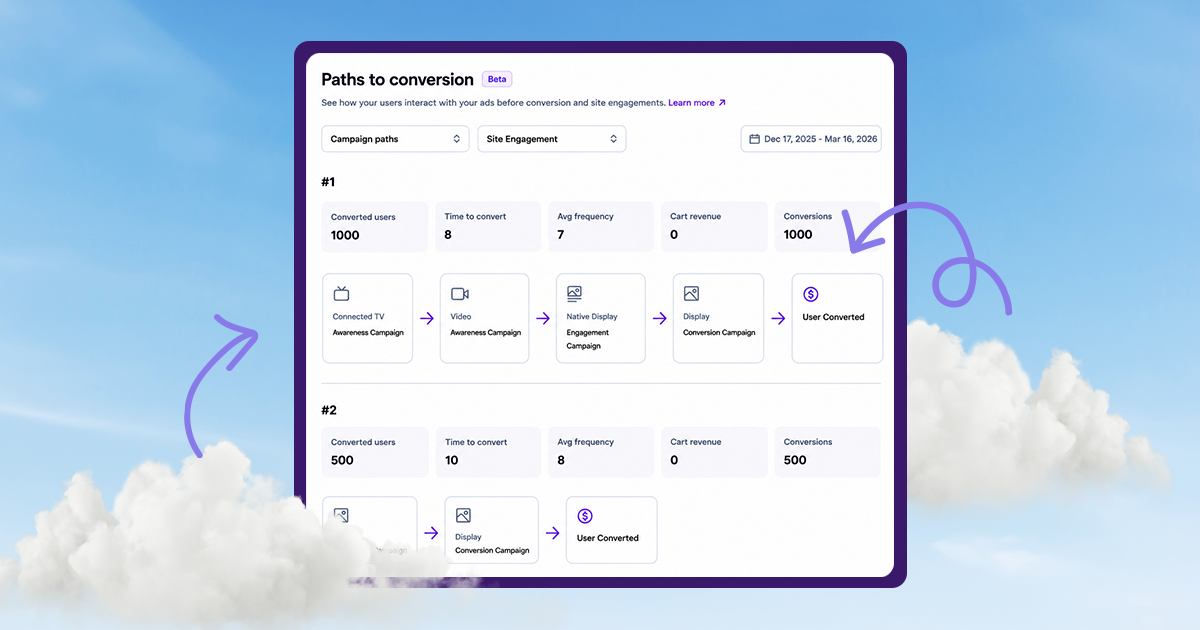
The play: Use sequential messaging to evolve the story. Someone who has already seen your awareness creative doesn’t necessarily need to see it again. Follow up with the next relevant message.
How can advertisers use geographic targeting in NHL CTV advertising?
Geographic targeting helps advertisers align NHL CTV advertising campaigns with the markets and regions where hockey fans and customers are located.
Few sports are as geographically tied to their fan bases as hockey. From Original Six rivalries to the Battle of Ontario, NHL fandom can change dramatically from one city, province, state or region to the next. This makes geographic targeting a natural fit for NHL CTV advertising campaigns. Rather than treating every hockey fan the same, advertisers can concentrate investment around relevant markets and align messaging with regional opportunities.
A QSR could promote game-night offers around NHL markets. A retailer could prioritize regions surrounding its physical locations. An auto advertiser could align messaging with dealership footprints. National brands could customize creative or promotions around different teams and markets.
Since NHL teams play 84 regular-season games each in 2026–27, advertisers have a long calendar of opportunities to test, learn and optimize their approach rather than putting everything behind one marquee game. The result is a CTV strategy built around where your customers and hockey fans actually are.
How can advertisers reach NHL fans beyond the couch?
Advertisers can extend NHL CTV advertising campaigns beyond the screen by using location intelligence and audience signals to connect digital activation with real-world fan behavior.
Geography can help determine where you activate. Location intelligence can provide additional signals around who you want to reach.
Using illumin’s location intelligence and audience capabilities, advertisers can reach and re-engage eligible sports audiences based on real-world event attendance, visitation patterns and cross-screen behaviors.
Depending on availability, that can include:
- Stadium and arena visitors
- Live event attendees
- Game-day POI audiences
- Fan-zone visitors
- Frequent sports venue visitors
- RadiusIQ event audiences
- Live sports streaming audiences
- Regional hockey fan audiences
- Sports and fitness enthusiasts
- Team and league interest audiences
Think about the possibilities around an arena on game day. Advertisers could build strategies around eligible audiences associated with the event footprint, then use Live Audiences to create opportunities to reconnect with those audiences afterward.
That gives brands another way to think beyond the CTV impression itself and connect real-world fan behavior with broader digital activation.
Audience availability and scale may vary by market, event and venue.
What opportunities exist beyond live NHL game inventory?
Live NHL inventory can be powerful, but it is only one part of an NHL CTV strategy. Pregame coverage, post-game analysis, highlights, replays, shoulder content, hockey programming and broader sports environments can all create additional opportunities to reach fans.
Hockey’s schedule gives advertisers something particularly valuable: frequency.
With 32 teams each playing 84 regular-season games, brands don’t have to build their entire strategy around one or two tentpole events. The season creates months of opportunities to reach audiences around rivalries, regional matchups, outdoor games, the Winter Classic, international games and major moments leading into the Stanley Cup Playoffs.
Moving beyond one specific matchup can also create greater flexibility around reach, scale and budget. Think of live game inventory as one part of your NHL CTV strategy, not the entire power play.
How can advertisers take their NHL CTV strategy beyond puck drop?
The best NHL CTV strategy isn’t necessarily about being everywhere hockey is. It’s about identifying the moments, audiences and markets that matter most to your brand.
Build awareness before puck drop. Own the moments that matter on game day. Keep the conversation going after the final horn. And as the NHL continues to grow its international footprint, consider opportunities to connect with hockey audiences beyond North America.
With illumin, advertisers can bring together premium CTV and eligible live inventory with geographic targeting, sports audiences, location intelligence, sequential messaging and cross-channel activation to build an NHL strategy around the fan, not just the game.
Ready to draw up your NHL CTV game plan? Talk to one of our experts about reaching hockey fans with illumin.
About illumin
illumin is redefining how marketers plan, execute and measure digital advertising, bringing every stage of the campaign lifecycle into one strategic platform. Through an intuitive drag-and-drop Canvas, marketers can visually connect strategy, activation and outcomes, and extend live audiences from programmatic advertising into social channels. Combining AI-powered intelligence with transparent insights, illumin gives brands and agencies the clarity to make better decisions, optimize with confidence and prove business impact. With offices in North America, Europe and South America, illumin supports brands and agencies across global markets. For more information, visit illumin.com.
See More. Achieve More.