For years, digital advertising has operated on an assumption: if marketers can collect enough signals, they can understand their audiences. More data meant more devices. More devices meant more behavioral signals. More signals, in theory, meant a clearer picture of the consumer. However, there is a problem with that logic. More signals do not necessarily mean more audience intelligence.
A person can browse on a laptop, stream on a connected TV, search on a phone and interact with an ad on another device. To an advertising platform, those interactions can look like separate people. Without a reliable way to connect them, marketers may end up targeting the same individual multiple times, making decisions from incomplete information to struggling in understanding what actually influenced an outcome.
As advertising becomes increasingly data-driven and shaped by AI, having more data is only part of the equation. Marketers also need confidence in what that data is telling them.
Audience Intelligence: the solution to complicated audience data
The modern consumer journey is fragmented by design. People move between devices, channels and environments throughout the day. The result is an enormous amount of information about how audiences behave, but far less clarity about how those interactions connect.
There is a fundamental difference between recognizing that several signals could belong to the same person and knowing that they do.
Some approaches make an informed prediction based on available signals, but those predictions can change as devices, behaviors and identifiers change. Identity built around validated information offers a different foundation – one that can connect activity back to a known individual and be continually re-validated.
That shift, from guessing to knowing, changes how marketers understand their audiences. When brands can’t confidently recognize the same person across different interactions, it becomes harder to understand what people actually respond to and where their advertising is making an impact.
From audience signals to audience intelligence
True audience intelligence should do more than tell marketers that a signal exists. It should help explain what that signal means.
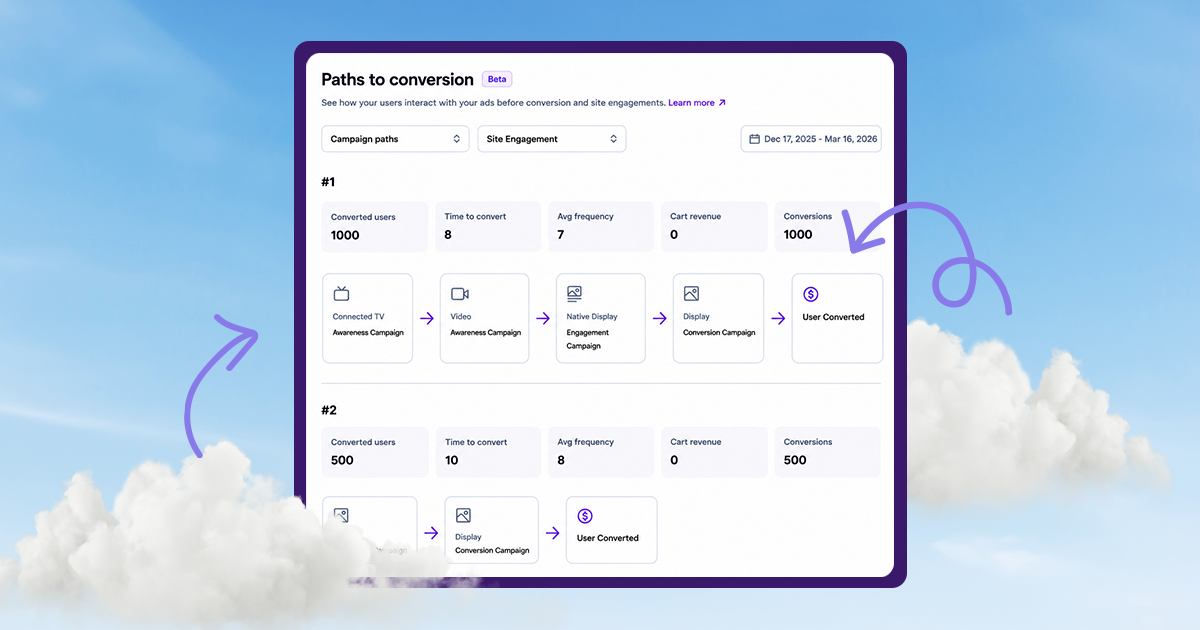
Consider a simple example: the same person sees an ad on their phone, later encounters another ad on their laptop and eventually converts on a third device. If those interactions are treated as unrelated users, the marketer sees three fragmented events.
If they can be connected to one person, the picture changes. The marketer can begin to understand the sequence, manage exposure more thoughtfully and see the journey as a whole.
This is the difference between having audience data and having audience intelligence. It also changes how marketers think about efficiency. Reaching the same person multiple times isn’t simply a reporting inconvenience, it can mean spending more to reach the same individual while gaining little additional value.
This is where illumin’s approach to audience intelligence comes in. Through our partnership with Audience Acuity, illumin can bring together identity, intent and enrichment to help marketers build a clearer picture of the people behind the signals, not just the signals themselves.
Building a stronger foundation for programmatic advertising
illumin provides the environment for our new partner Audience Acuity that’s designed to connect audience signals back to verified individuals. where that audience intelligence can be used across planning, activation, optimization and measurement.
The significance in this parternship isn’t simply the addition of another data source. It is the opportunity to make a better understanding of the audience part of the advertising process from the start.
When marketers have a clearer picture of who they want to reach and what matters to them, they can approach audience planning with greater confidence. They can build strategies around people rather than disconnected signals, understand journeys across channels and evaluate campaign performance with a clearer view of who was actually reached.
As the industry continues moving toward AI-powered advertising, that foundation becomes increasingly important. AI can help marketers process more information and act faster, but the value of those decisions still depends on the quality of the information behind them.
The next competitive advantage should be certainty
Advertising has always been a business of probabilities. Which audience will respond? Which channel will perform? Which message will drive action?
These questions will never disappear, but marketers should not have to guess about everything.
Knowing that multiple signals belong to the same person creates a more dependable foundation for the decisions that follow, from audience strategy and activation to optimization and measurement. The future of audience intelligence is not simply about collecting more signals. It is about making the signals marketers already have more meaningful, more connected and more trustworthy.
In an industry increasingly powered by data and AI, intelligence starts with something much more fundamental: knowing who you’re actually talking to.
About illumin
illumin is redefining how marketers plan, execute and measure digital advertising, bringing every stage of the campaign lifecycle into one strategic platform. Through an intuitive drag-and-drop Canvas, marketers can visually connect strategy, activation and outcomes, and extend live audiences from programmatic advertising into social channels. Combining AI-powered intelligence with transparent insights, illumin gives brands and agencies the clarity to make better decisions, optimize with confidence and prove business impact. With offices in North America, Europe and South America, illumin supports brands and agencies across global markets. For more information, visit www.illumin.com.
See More. Achieve More.