
There is no shortage of audience data in advertising. Marketers have access to signals from websites, devices, purchases, content consumption and countless other interactions. Every day, more information is collected, analyzed and added to the already complex picture of the people brands are trying to reach.
However, more data does not automatically create more understanding. Audience intelligence is about turning those disconnected signals into a clearer understanding of who an audience is, what matters to them and how they behave. The challenge for marketers is no longer simply collecting more data. It is understanding what that data is actually telling them.
A mobile advertising ID can tell you something about a device. A household can reveal patterns in behavior. A purchase can provide insight into intent. On their own, however, these signals only tell part of the story. The real value comes from understanding how they connect.
Data is the starting point, not the end result
For years, marketers have focused on acquiring and accessing more first-party data, much of it concentrated within walled gardens. The challenge is that audience data often remains within those ecosystems for targeting and measurement. This can make it harder to understand how audiences behave across the broader advertising technology landscape.
The result is a familiar problem: marketers have more information, but not necessarily more clarity. This is where audience intelligence becomes important. Instead of treating every signal as an isolated data point, marketers can look at how different identifiers, devices and behaviours relate to one another.
Identity resolution is one way marketers can do this. It connects people or households with devices and platforms using deterministic and probabilistic matching approaches, helping create a more unified view of an audience. The goal isn’t to collect the biggest possible dataset. It is to make audience data more meaningful and actionable.
The more you connect, the more you see
Consider a typical household. There may be multiple people, each with their own devices, interests and behaviors. Some interactions happen on shared devices or connected TVs, while others happen on personal phones and laptops.
From a data perspective, a marketer might see multiple devices, interactions and signals. Without a way to connect those signals, it can be difficult to know whether they represent different people or different interactions with the same person.
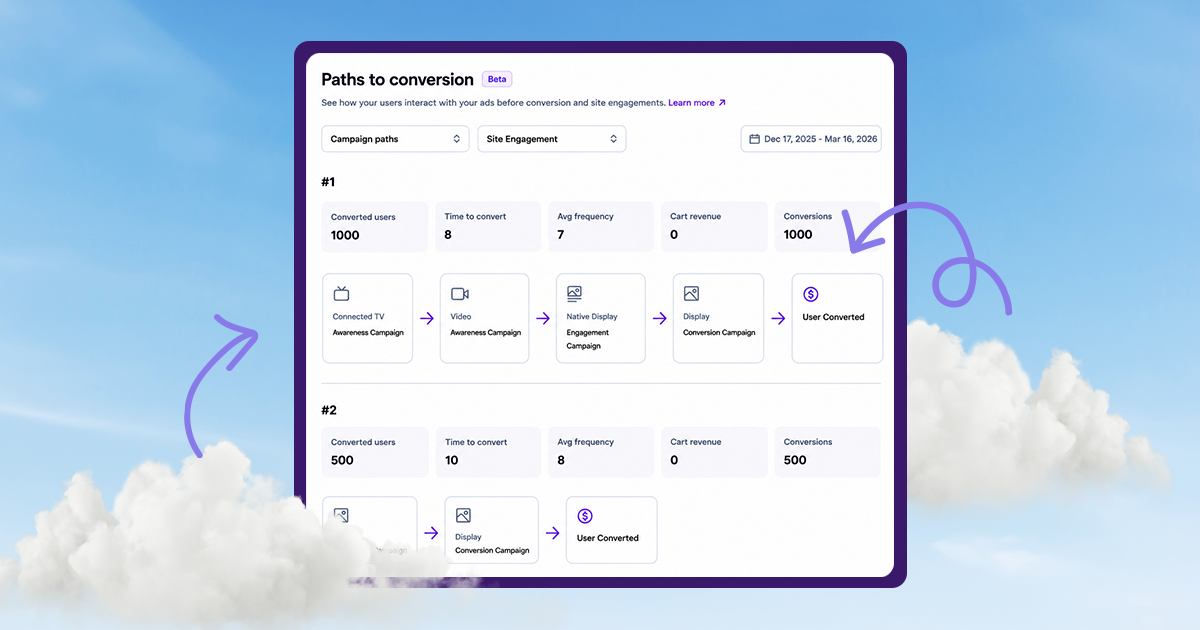
Imagine someone sees an ad on their phone, later sees another on their laptop and eventually converts on a connected TV. If those interactions are treated as three unrelated users, the marketer sees three fragmented events. When they can be connected to the same person, the picture changes. The marketer can begin to understand the sequence of interactions, manage exposure more thoughtfully and evaluate the campaign with greater context.
What is identity resolution?
Identity resolution connects identifiers and signals that belong to the same person or household. An identity graph can help organize those connections by linking identifiers across devices, channels and other touchpoints.
There are two common approaches to identity matching: deterministic and probabilistic.
Deterministic identity uses a known identifier to establish a connection. Examples can include hashed email addresses, phone numbers or authenticated customer IDs. When a shared identifier is available, the connection is based on a known relationship.
Probabilistic matching uses multiple signals to determine whether different identifiers are likely to belong to the same person or household. Signals can include IP addresses, device characteristics and behavioral patterns.
In practice, identity strategies can use both approaches. IAB’s research on CTV identity and measurement describes advertisers balancing deterministic identifiers such as hashed emails and device IDs with probabilistic signals such as IP addresses when direct identifiers are unavailable.
The important question for marketers isn’t simply whether a provider uses the word “deterministic.” It is understanding how identities are verified, connected and maintained.
This means asking:
- How are identities verified?
- How are devices and records connected?
- Is the audience built at the individual or household level?
- How frequently is the underlying data refreshed?
- Which connections are deterministic and which are modeled or inferred?
Those details can have a meaningful impact on how much confidence marketers can place in an audience.
Audience intelligence puts identity into context
Identity alone isn’t the end goal. Knowing that several signals belong to the same person is useful. Understanding what those signals say about that person is where audience intelligence becomes more valuable.
An identity graph can connect fragmented identifiers, while additional audience data can provide context around demographics, interests, behaviors and intent. Together, these layers can give marketers a more complete view of the people behind their audience signals.
The same audience intelligence that informs who a marketer wants to reach can also influence how that audience is activated, how performance is understood and where optimization opportunities emerge. The more connected that process becomes, the less marketers have to piece together from separate data sources and reports.
How illumin and Audience Acuity are bringing audience intelligence into the campaign workflow
At illumin, we believe audience intelligence should do more than give marketers access to data. It should help them make sense of it.
Through its partnership with Audience Acuity, illumin is bringing person-level audience intelligence into the platform, connecting validated identity information with identifiers including email, phone, mobile advertising IDs, IP addresses and CTV IDs. The integration is designed to help advertisers discover, activate and measure audiences with greater precision.
Rather than starting with a broad segment and assuming who sits behind it, marketers can work with audiences grounded in verified people and enriched with intent and behavioral signals.
The integration brings that audience intelligence into the campaign workflow, allowing marketers to move from understanding an audience to planning, activation, optimization and measurement without losing that identity foundation along the way.
The integration delivers a 90% match rate within illumin, helping preserve audience precision as marketers move from identifying who they want to reach to actually reaching them.
This creates greater context around the signals marketers already rely on. The question becomes not just where to spend, but who the audience is, why it matters and what happens after activation.
How audience intelligence can improve advertising decisions
When marketers have a clearer understanding of who sits behind an audience signal, audience intelligence can inform decisions throughout the campaign lifecycle.
It can help marketers:
- Plan audiences: Develop a clearer picture of the people they want to reach.
- Activate across channels: Connect audience insights to targeting across devices and environments.
- Optimize campaigns: Use audience context to identify opportunities for adjustment.
- Improve measurement: Understand who was reached and connect audience information to campaign outcomes.
- Make better-informed decisions: Bring audience intelligence into the broader campaign strategy instead of treating individual signals in isolation.
About illumin
illumin is redefining how marketers plan, execute and measure digital advertising, bringing every stage of the campaign lifecycle into one strategic platform. Through an intuitive drag-and-drop Canvas, marketers can visually connect strategy, activation and outcomes, and extend live audiences from programmatic advertising into social channels.
Combining AI-powered intelligence with transparent insights, illumin gives brands and agencies the clarity to make better decisions, optimize with confidence and prove business impact. With offices in North America, Europe and South America, illumin supports brands and agencies across global markets.
For more information, visit illumin.com.
See More. Achieve More.